
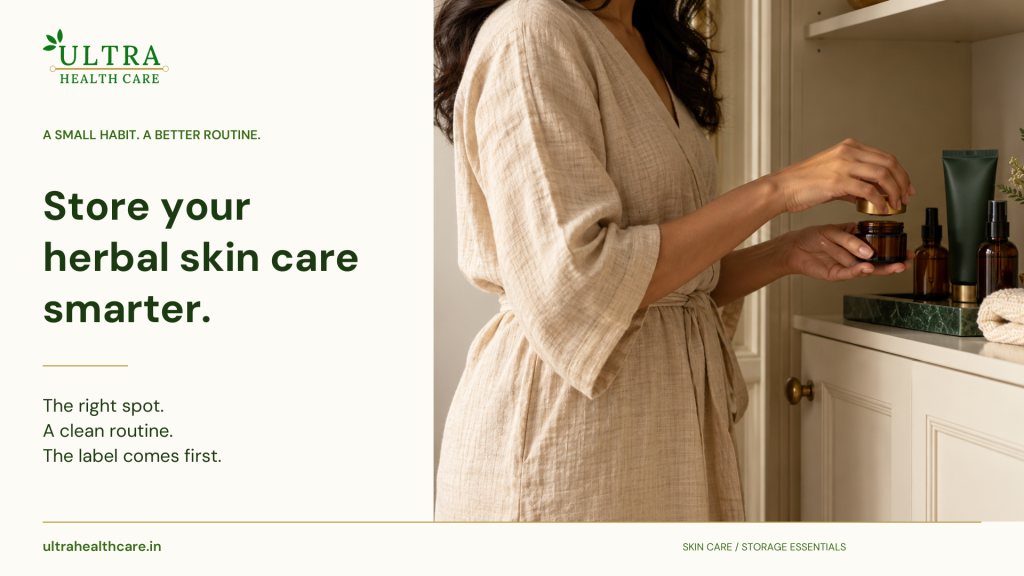
How to Store Herbal Skin-Care Products at Home
A face-pack powder beside the bathroom tap is convenient. A cleanser left in a travel bag is easy to forget. Before buying another product, it helps to look at where your current ones live.
Start with the directions on the actual pack. Keep the label readable, close the container after use and choose a suitable storage spot. There is no single shelf-life rule for everything described as herbal or Ayurvedic.
This guide covers external skin-care products. It does not provide storage instructions for Ayurvedic medicines, capsules or juices, which need their own label-specific guidance.
What matters more than the word “herbal”?
The format matters: a dry powder, a ready-made gel and an oil are different preparations. Their ingredients, containers and manufacturer instructions may differ too.
A familiar botanical name cannot tell you how long the finished pack will remain suitable to use.
What does the evidence actually say?
The FDA explains that heat, moisture, air and handling can affect cosmetics over time. Its guidance supports careful storage and clean handling, but does not establish a shelf life for any Ultra Healthcare formulation.[1]
The American Academy of Dermatology recommends keeping cosmetics in a clean, dry place away from direct sunlight and closing their lids securely.[3] These are broad handling principles. Product-specific directions take priority; this article does not infer an exact storage temperature from them.
These references are consumer guidance, not clinical trials comparing storage methods for herbal powders. Their US regulatory statements are not presented here as Indian legal requirements. Evidence was checked on 28 October 2026.
Traditional preparations and modern packaging
Many Indian households are familiar with mixing a face-pack powder just before use. That practice is different from opening a manufactured ready-to-use cleanser. Do not assume both formats share the same instructions simply because both mention plants.
An Ayurvedic association or traditional ingredient history does not supply missing stability data. Read the finished product’s label rather than borrowing a homemade recipe’s storage advice.
Dry powders: separate the pack from the mixing bowl
Many Indian households are familiar with mixing a face-pack powder just before use. That practice is different from opening a manufactured ready-to-use cleanser. Do not assume both formats share the same instructions simply because both mention plants.
An Ayurvedic association or traditional ingredient history does not supply missing stability data. Read the finished product’s label rather than borrowing a homemade recipe’s storage advice.

Packaged cleansers: keep the instructions with the product
A tube is convenient, but transferring its contents into an unlabelled jar creates an information problem: the next person cannot see the batch details or instructions. Keep the original packaging where practical.
When comparing a powder with a cleanser, compare intended use and directions first. A different texture does not automatically mean better suitability, longer shelf life or greater effectiveness.
Compare Ultra Face Wash Gel’s listed format and directions with the product you already use.
Build a shelf you can check quickly
A tube is convenient, but transferring its contents into an unlabelled jar creates an information problem: the next person cannot see the batch details or instructions. Keep the original packaging where practical.
When comparing a powder with a cleanser, compare intended use and directions first. A different texture does not automatically mean better suitability, longer shelf life or greater effectiveness.
Explore the complete Ultra Healthcare range with your current shelf and actual needs in mind.
Read dates without guessing
Check the expiry or use-before information and any instructions that apply after opening. If an open-jar symbol appears, its number followed by “M” describes a period after opening.[3] Do not assume that every product carries this symbol.
Write the opening date on a small sticker without covering the original label. This helps you follow the instructions; it does not restart the expiry clock or create a fresh guarantee of safety.
If the date is blurred, the seal appears damaged or the directions are unclear, photograph the pack and retain the order details. Ask about that specific batch rather than relying on a generic online shelf-life estimate.
Ask Ultra Healthcare’s official support team a product, batch, order or label question. Keep the enquiry focused on the product; avoid sharing sensitive medical details unnecessarily.

What if the product changes?
A changed smell, colour or texture deserves attention. FDA guidance advises discarding cosmetics with changes in colour or smell.[2]
Do not add fragrance or another product to disguise a change. Looking normal is not a substitute for following labelled dates and directions.
Stop using a product if it causes an unexpected reaction and seek advice from a qualified healthcare professional.[2]
Product support can address a batch or order question; it cannot replace an examination of a skin problem. “Natural” does not guarantee that a product will suit everyone.[2]
Frequently asked questions
Should every herbal skin-care product go in the fridge?
No universal refrigeration instruction can be given. Follow the pack. If it does not answer your question, ask the manufacturer rather than choosing a temperature yourself.
Can I use the same expiry rule for powders and gels?
Use each product’s own directions. This guide has not verified stability data that would justify one replacement interval across both formats.
What should I do before travelling?
Check that labels remain readable and closures are secure. Plan where the pack will stay during the journey, and avoid leaving cosmetics in a hot parked car.[1] Carry the instructions with the product.
Key takeaways
Read the actual pack, keep dates visible and separate dry supplies from preparation tools. A small, organised collection is easier to manage than a shelf full of forgotten purchases. Good handling supports responsible use; it cannot extend a product’s labelled expiry.
References
1. FDA, Shelf Life and Expiration Dating of Cosmetics. Accessed 28 October 2026. https://www.fda.gov/cosmetics/cosmetics-labeling/shelf-life-and-expiration-dating-cosmetics
2. FDA, Using Cosmetics Safely. Accessed 28 October 2026. https://www.fda.gov/cosmetics/resources-consumers-cosmetics/using-cosmetics-safely
3. American Academy of Dermatology, When to toss your makeup and sunscreen. Accessed 28 October 2026. https://www.aad.org/public/everyday-care/skin-care-secrets/prevent-skin-problems/replace-makeup-sunscreen