
When men first hear “Ashwagandha for testosterone,” many ask the same thing: “Is this a real, evidence-backed benefit, or just marketing noise?”
That’s an important question, especially if you’re a fitness-focused man aged 25–45 juggling work stress, workouts, and life balance.
Let’s break it down with real, peer-reviewed science, no hype, no guesswork.
What Science Actually Says About Ashwagandha and Testosterone
Ashwagandha (Withania somnifera) is an adaptogenic herb that has been part of Ayurvedic medicine for centuries.
Modern research has started to put its traditional use under the microscope, particularly for hormonal balance and male health. [Source]
Clinical Studies Show Potential Testosterone Increases
Multiple human studies indicate that Ashwagandha supplementation may raise testosterone levels in men. For example:
A randomized, placebo-controlled study found that taking a standardized Ashwagandha extract for 8 weeks was associated with a ~15% increase in testosterone compared with placebo. [Source]
Another trial documented increased testosterone alongside improved sexual health markers after 8 weeks of Ashwagandha extract supplementation.
These results are promising and suggest the herb supports healthy testosterone, especially in men with lifestyle-related hormonal imbalances.
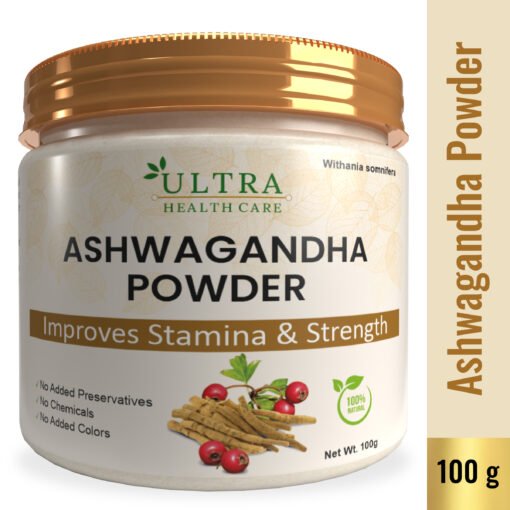
Best Organic Ashwagandha Powder | 10+ Lakh Customer Trust
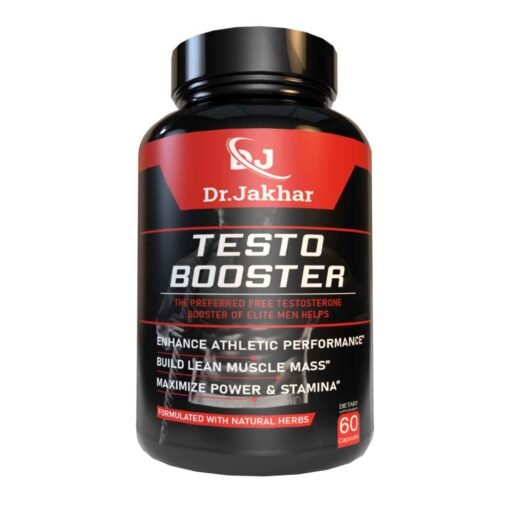
Dr. Jakhar Testo Booster | Ayurvedic Testosterone Enhancer
Not All Results Are Uniform – But the Trend Is Positive
Some trials have shown strong increases, while others indicate modest or statistically non-significant effects. This variation often comes down to:
- Differences in dosage
- Type of Ashwagandha extract used
- Participant characteristics (age, stress levels, training status)
Secondary Hormones Matter Too
Ashwagandha has also been linked with increases in DHEA-S, a hormone that can convert into testosterone, and overall improved hormonal balance in stressed men. [Source]
Why the Science Isn’t “Set in Stone”, and That’s Okay
While evidence points toward benefits, research still isn’t conclusive enough to call Ashwagandha a magic testosterone booster. Many studies have:
- Small sample sizes
- Short durations (typically 8–12 weeks)
- Variety in extract quality and dosage
That means we can say with reasonable confidence that Ashwagandha may support healthy testosterone levels in men – particularly when stress and lifestyle factors are involved. But it isn’t a guaranteed hormone elevator for everyone.
How Real Men Experience It – Beyond Numbers
From a practical standpoint (and not just numbers on a blood test), men who take Ashwagandha often report:
- Better energy and motivation
- Improved mood and stress handling
- Enhanced sexual drive
- Greater training recovery
These subjective gains correlate with the herb’s adaptogenic effects on the nervous system, stress response, and general hormonal balance — all of which are tightly linked to testosterone health.
Why Testosterone Drops in Men Aged 25–45
Most men don’t lose testosterone overnight.
It slips quietly. Year after year. Often unnoticed – until energy dips, workouts stall, and drive feels… off.
If you’re between 25 and 45 and doing everything right, lifting weights, eating protein, staying active, yet still feel flat, there’s a reason. And it’s not laziness or age alone.
The Modern Testosterone Problem (It’s Not Just Aging)
According to large population data, total testosterone in men starts declining ~1% per year after the late 20s. But here’s the uncomfortable truth:
📉 Lifestyle stress accelerates that decline far faster than age alone.
A 2023 review in The Journal of Clinical Endocrinology & Metabolism noted that chronic psychological stress, sleep disruption, and metabolic strain are now among the strongest predictors of low testosterone in otherwise healthy men.
This explains why two men of the same age can have wildly different hormone profiles.
The Cortisol and Testosterone Relationship
You can’t talk about testosterone without talking about cortisol.
Cortisol is your primary stress hormone. It’s not “bad”, but when it stays high for too long, it directly suppresses testosterone production.
How it works (simplified):
- Cortisol and testosterone share the same raw materials in the body
- Under stress, the body prioritizes survival hormones over reproductive hormones
- Testosterone synthesis gets deprioritized
A 2022 human study published in Frontiers in Endocrinology confirmed that chronically elevated cortisol is associated with reduced luteinizing hormone (LH), the signal that tells your testes to produce testosterone.
Hormonal Response to Lifestyle Factors
| Factor | Effect on Cortisol | Effect on Testosterone |
|---|---|---|
| Chronic stress | ↑Increases | ↓Decreases |
| Poor sleep | ↑Increases | ↓Decreases |
| Overtraining | ↑Increases | ↓Decreases |
| Recovery & relaxation | ↓Lowers | ↑Supports |
This is why some men train harder and see worse results.
Why Training Alone Isn’t Enough Anymore
Strength training does acutely raise testosterone, but only briefly.
If stress, sleep debt, and nervous system overload dominate the rest of your day, those short hormonal spikes don’t translate into long-term gains.
Common modern testosterone suppressors:
- 6–7 hours (or less) of fragmented sleep
- High-pressure work environments
- Constant digital stimulation
- Excess caffeine without recovery
- Calorie restriction combined with intense training
A 2024 meta-analysis in Sleep Medicine Reviews showed that men sleeping under 6 hours consistently had 10–15% lower morning testosterone compared to well-rested controls.
Where Ashwagandha Fits In (Strategically, Not Magically)
This is where Ashwagandha for testosterone becomes relevant, not as a stimulant, but as a regulator.
Ashwagandha doesn’t force testosterone production.
Instead, it works upstream by:
- Lowering cortisol
- Calming the hypothalamic–pituitary–adrenal (HPA) axis
- Supporting nervous system recovery
This cortisol-lowering effect explains why Ashwagandha tends to work best in:
Stressed professionals
- Overtrained gym-goers
- Men with fatigue, poor sleep, or low drive
- Why This Matters for Muscle, Energy, and Drive
Testosterone doesn’t just influence muscle mass. It impacts:
- Motivation and competitiveness
- Recovery speed
- Libido
- Mental resilience
When cortisol stays high, these systems stay muted, no matter how disciplined your routine is.
| Condition | Muscle Gain | Recovery | Drive |
|---|---|---|---|
| High cortisol state | Poor | Slow | Low |
| Balanced stress hormones | Optimal | Faster | Higher |
This is why men often say Ashwagandha doesn’t make them feel “amped”, it makes them feel normal again.
Ashwagandha for Muscle Growth, Strength & Recovery (What the Evidence Shows)
When men talk about Ashwagandha muscle growth, they’re usually not chasing size alone.
They’re chasing strength that actually progresses, recovery that keeps pace with training, and energy that doesn’t disappear by mid-week.
This is where Ashwagandha becomes more than a “stress herb” and starts to make physiological sense for lifters.
Why Testosterone Alone Doesn’t Build Muscle (But It Sets the Stage)
Testosterone is not a direct muscle-builder. It’s a permission signal.
- Muscle growth depends on:
- Protein synthesis
- Training stimulus
- Nervous system readiness
- Recovery capacity
When testosterone is suppressed (often via high cortisol), muscle protein synthesis efficiency drops. Recovery slows. Motivation dips. Training quality suffers.
This is why Ashwagandha for testosterone indirectly influences muscle outcomes — by restoring the hormonal and neurological environment required for growth.
What Human Studies Show: Ashwagandha + Resistance Training
One of the most cited human trials on Ashwagandha and muscle performance was published in Journal of the International Society of Sports Nutrition.
🔬 Key Findings (Young, Resistance-Trained Men)
Men supplementing with Ashwagandha root extract while following a structured resistance-training program experienced:
- Greater increases in muscle strength (bench press & leg extension)
- Significant gains in muscle size
- Reduced exercise-induced muscle damage
- Higher increases in testosterone compared to placebo
(Source: JISSN, 2015 – human randomized controlled trial)
Cortisol Reduction = Better Muscle Recovery
Here’s where the cortisol testosterone relationship becomes practical.
High cortisol:
- Increases muscle protein breakdown
- Delays glycogen replenishment
- Disrupts sleep quality
Ashwagandha’s adaptogenic action reduces cortisol output under stress.
A 2021 systematic review in Nutrients reported consistent cortisol reductions in men supplementing with Ashwagandha, particularly under physical or psychological stress.
Less cortisol:
✔ Better recovery
✔ Better sleep
✔ Better training output
Ashwagandha Is Not a Pre-Workout (And That’s the Advantage)
Unlike stimulants:
- It doesn’t spike adrenaline
- It doesn’t mask fatigue
- It doesn’t disrupt sleep later
- Instead, most men report:
- More consistent training energy
- Less “burnout” feeling
- Improved focus during workouts
- Better sleep quality at night
This explains why Ashwagandha benefits are often described as subtle but compounding.
Who Sees the Best Muscle-Related Benefits?
Ashwagandha works best for men who:
- Train 3–5 days per week
- Experience high work or life stress
- Struggle with sleep or recovery
- Feel “flat” despite consistent training
Men already optimized for sleep, calories, and stress may see smaller but still measurable benefits.
Ashwagandha Forms Matter for Muscle Outcomes
Not all Ashwagandha supplements are equal, and this is where many studies get misunderstood.
Most muscle-related trials used:
- Standardized root extracts
- Consistent withanolide content
- Clinically studied dosages
This leads directly into the next critical question:
KSM-66 vs Root Powder, Exact Dosage for Men, Safety & Real-World Expectations
When researching Ashwagandha for testosterone, most men come across two common forms:
- Ashwagandha root powder
- Standardized Ashwagandha extracts such as KSM-66
Both have value – but they serve slightly different purposes, and understanding that difference matters.
Ashwagandha Root Powder: Traditional, Gentle, and Holistic
Ashwagandha root powder is the most traditional form, used in Ayurveda for centuries. It is typically consumed with warm milk or water and is valued for its general wellness and calming properties.
Strengths of root powder:
- Closely aligned with traditional Ayurvedic use
- Provides a gentle, full-plant experience
- Suitable for men seeking daily stress support or general vitality
- Often preferred by those who want minimal processing
However, because root powder is not concentrated, the amount of active compounds (withanolides) can vary based on:
- Soil conditions
- Harvest quality
- Processing methods
As a result, higher doses (usually in grams) are needed to achieve noticeable effects, and results may differ from person to person.
Standardized Extracts (Including KSM-66): Precision and Consistency
Standardized extracts like KSM-66 are created by concentrating compounds naturally present in the root — without adding synthetic ingredients.
What makes extracts different is consistency, not superiority.
Why extracts are often used in clinical studies:
- Fixed withanolide content
- Predictable absorption
- Lower daily dosage (milligrams instead of grams)
- Easier to evaluate in research settings
This is why most modern human trials examining testosterone levels, cortisol reduction, and muscle strength have used standardized extracts rather than raw powder.
A Practical Comparison
| Aspect | Root Powder | KSM-66 / Standardized Extract |
|---|---|---|
| Traditional use | Very high | Moderate |
| Clinical research usage | Limited | Extensive |
| Dosage | Higher (grams) | Lower (mg) |
| Potency consistency | Variable | Consistent |
| Best suited for | General wellness, stress | Targeted hormone & fitness goals |
Which Should You Choose?
If your goal is general stress balance, calmness, and daily wellness, Ashwagandha root powder can be a perfectly reasonable choice.
If your goal is measurable support for testosterone, muscle recovery, and performance, standardized root extracts are typically more practical.
This distinction keeps expectations realistic, and avoids disappointment.
👉 Neither form is “bad.”
The choice depends on what you’re trying to achieve.
Final Thought
When used correctly, Ashwagandha for testosterone is neither hype nor a quick fix.
Research shows it works best by helping the body manage stress and cortisol – two major factors that quietly suppress testosterone in modern men.
Both root powder and standardized extracts have value. Root powder supports overall wellness, while standardized extracts are often more practical for men focused on testosterone balance, muscle recovery, and training performance.
Ashwagandha doesn’t force hormone production. It helps restore the conditions where healthy testosterone levels can naturally stabilize.
For men aged 25–45 dealing with fatigue, stress, or stalled progress, Ashwagandha for testosterone can be a sensible, science-backed addition, not a shortcut, but support.
